

🎓 What: Bachelor of Science in Ocean Engineering
📍 Where: University of New Hampshire, Durham, NH
If you’re fascinated by the ocean’s mysteries and want a career that blends engineering with real-world problem-solving, UNH’s B.S. Ocean Engineering puts you right at the intersection of tech, science, and sustainability. This program prepares students to tackle challenges like ocean mapping, marine robotics, coastal erosion, offshore structures, and renewable ocean energy, all with hands-on experience in cutting-edge labs and field environments.
🚀 What You’ll Study & Do
From your first semester, you’re immersed in interdisciplinary learning rooted in engineering fundamentals, physical sciences, and marine systems. You’ll build skills in hydrodynamics, ocean mapping, and design while using emerging technologies to explore and protect the marine world. The program also offers flexibility to dive deeper into civil, mechanical, environmental, or electrical engineering and marine sciences.
🌍 Why It’s Great for International Students
1. Real-World Research + Experiences
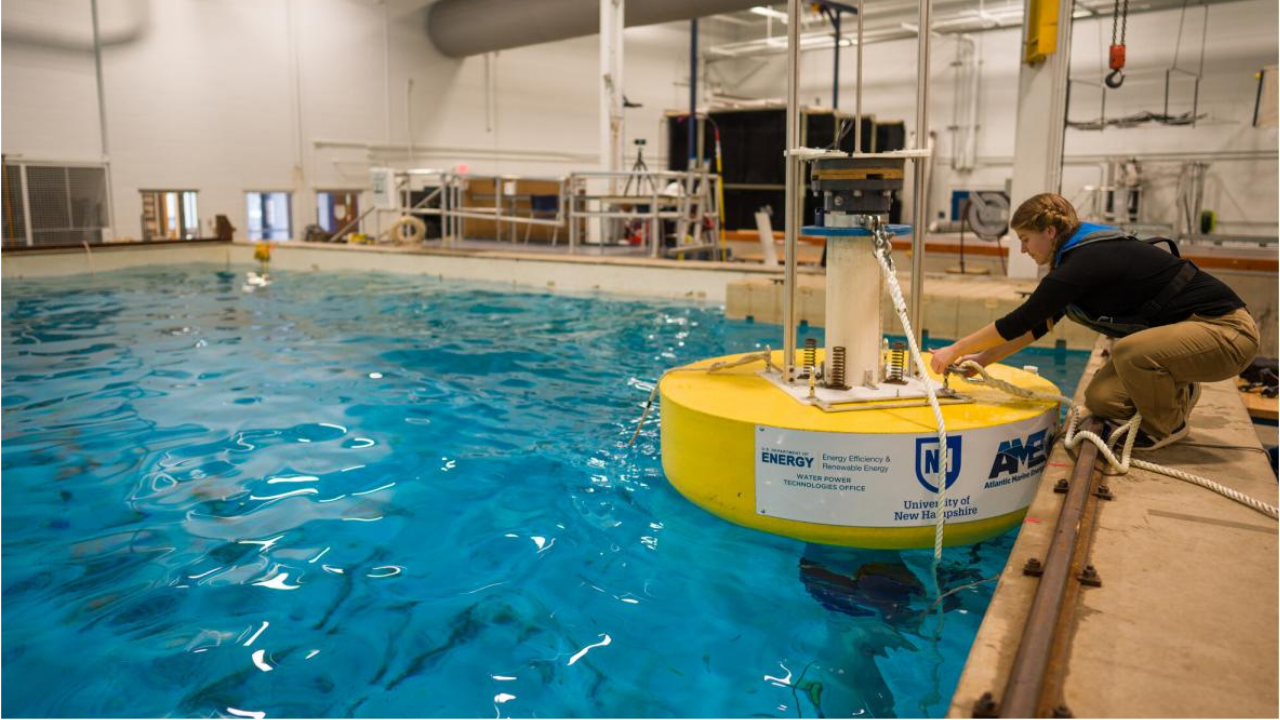
UNH students work in the Jere A. Chase Ocean Engineering Lab, aboard research vessels, and in coastal environments — knowledge you can’t get in a lecture alone.
2. Growing Global Demand
With climate change, coastal infrastructure needs, ocean sustainability, and offshore energy expansion, ocean engineering roles are increasingly critical worldwide. STEM-related engineering studies also support Optional Practical Training (OPT) extensions for international grads.
3. Pathway to Advanced Roles
Whether you want to work for national agencies like NOAA or in industry consulting, or pursue graduate research, this degree sets a strong foundation.
💼 Career Possibilities
Graduates can work in:
• Government agencies — like the National Oceanic and Atmospheric Administration (NOAA)
• Offshore energy & marine tech companies
• Ocean mapping and geospatial firms
• Naval and defense labs
• Coastal infrastructure design and environmental consulting
• These sectors value engineers who can blend technical precision with environmental insight.
💸 Tuition & Costs (International Students)
For out-of-state (international) undergraduates, about $37,070/year plus mandatory fees (~$3,774/yr). Note: Additional living costs (housing, food, transport) should also be factored.
UNH also provides resources on scholarships and financial support, which international applicants are encouraged to explore early.
🗓 Key Dates to Know
Fall Semester (Main Entry Point):
• Recommended Deadline: April 1 (strongly advised for international applicants)
• Final Deadline: July 1 (subject to availability)
Spring Entry:
• Typically December 1 for return and new students, though fewer spaces may be available.
🌟 Final Take
If you’re drawn to engineering, sustainability, and ocean science, and you want a degree that puts you in labs, on research vessels, and at the forefront of ocean tech, UNH’s Ocean Engineering B.S. delivers. It’s a perfect fit for international students who want real experience, global relevance, and a launchpad into careers that make waves (literally).