Japan and the United States are preparing to announce a major energy partnership that could see Japanese investment reach up to ¥11.5 trillion ($73 billion) across U.S. energy infrastructure, according to reports by The Yomiuri Shimbun.
The planned joint statement is expected to be unveiled during Prime Minister Sanae Takaichi’s meeting with U.S. President Donald Trump in Washington, positioning energy security and advanced power generation as central pillars of bilateral cooperation.
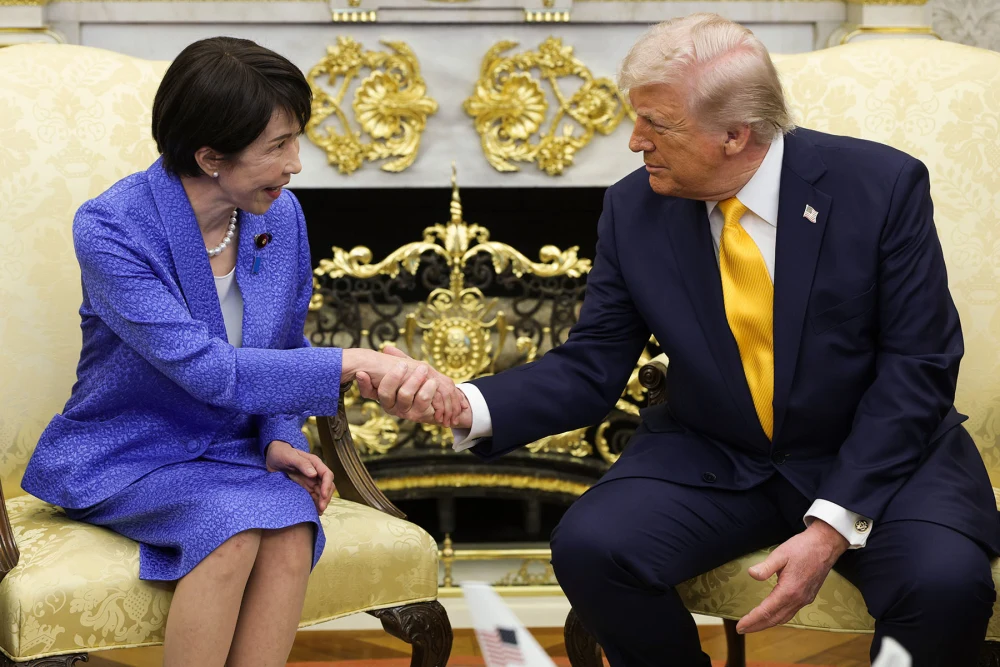
Japanese Prime Minister Sanae Takaichi meets U.S. President Donald Trump in the Oval Office, March 19, 2026.
A significant portion of the investment—up to $40 billion—will be directed toward the development of next-generation small modular reactors (SMRs). The project will be led by a joint venture between Japan’s Hitachi Ltd. and U.S.-based GE Vernova, with planned deployment in states including Tennessee. The reactors are expected to provide scalable, lower-cost nuclear energy and support both countries’ ambitions to lead in next-generation nuclear technologies.
In parallel, Japan is expected to invest up to $33 billion in natural gas-fired power plants in Pennsylvania and Texas. These facilities aim to address surging electricity demand driven by the rapid expansion of artificial intelligence infrastructure and data centers across the United States.
The partnership also reflects broader energy security concerns. With global oil markets facing volatility linked to tensions in the Middle East, the agreement is expected to include provisions to explore investments that would increase U.S. crude oil exports to Japan, strengthening supply stability.
The projects form part of a broader $550 billion bilateral investment framework tied to ongoing trade and tariff discussions. Japanese industrial firms, including Hitachi, Toshiba Corp., and Mitsubishi Electric Corp., are expected to supply key components and technical expertise, supporting both export growth and domestic industrial activity.
Future phases of the agreement may expand into large-scale nuclear development and joint oil stockpiling initiatives, signaling a longer-term strategy to align energy infrastructure, supply chains, and economic security priorities between the two countries.
The investment underscores a shift toward deeper U.S.-Japan collaboration in energy resilience, advanced manufacturing, and critical infrastructure as global demand and geopolitical pressures continue to reshape the energy landscape.