The University of Oregon (UO) has secured a $20 million grant from the U.S. Department of Education to expand national efforts supporting youth with disabilities as they transition from school to employment and independent living.
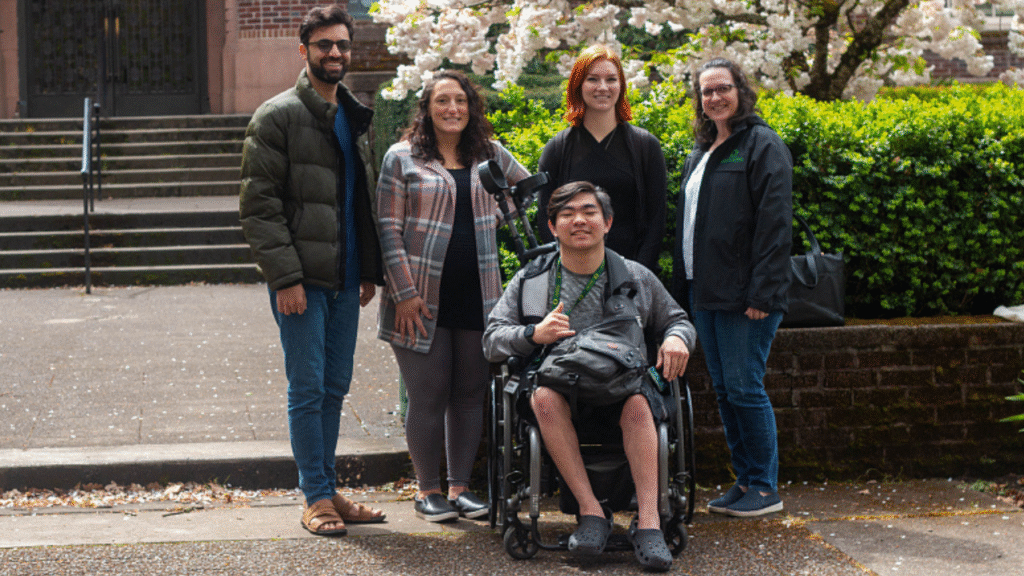
The funding will support the National Technical Assistance Center on Transition: The Collaborative, a nationwide initiative led by researchers in UO’s College of Education in partnership with five other universities. The center provides technical assistance to state and local agencies that help students with disabilities prepare for graduation, career pathways and independent adulthood.
The program serves all 50 U.S. states as well as 10 territories and jurisdictions, working with education and vocational rehabilitation agencies to improve outcomes for students with disabilities.
“We know that change happens at the state and local level; so this is an efficiency model with states as the true change agents,” said Deanne Unruh, co-director of the College of Education’s Secondary Special Education and Transition Research unit.
An estimated 2 million high school students in the United States, about 13 percent of all high schoolers, have physical, emotional or other disabilities. Research shows these students graduate and enter the workforce at lower rates than their nondisabled peers.
Through the center, researchers provide guidance on data collection, professional development, family engagement and career pathway development. The goal is to strengthen collaboration between education systems and workforce programs to help students transition successfully into employment.
“Our goal is to make sure that the playing field is equitable and that students with disabilities are leaving high school and going into the workforce prepared to meet their life goals,” Unruh said.
Partner institutions include The George Washington University, the University of North Carolina at Charlotte, the University of Maryland, the University of Kansas and Portland State University.
Under the new grant, UO will provide fiscal oversight and technical leadership for the initiative. Staff affiliated with the center operate in 18 states, maintaining close relationships with agencies that serve students with disabilities.
The university has been involved in transition services research since 1987, when education researcher Andrew Halpern established one of the first academic programs in the United States focused on the transition needs of students with disabilities.
Today, the University of Oregon ranks among the top institutions nationally in special education research, and its programs continue to support state and local agencies working to improve graduation and employment outcomes for young people with disabilities.