As U.S. institutions mark Financial Aid Awareness Month each February, Washington State College of Ohio (WSCO) is underscoring its year-round commitment to affordability and access. The community college, based in Marietta, says its outreach efforts aim to ensure that Ohio families fully utilize available federal, state and institutional aid.
In 2024, only about 52% of Ohio high school seniors completed the Free Application for Federal Student Aid (FAFSA), leaving millions of dollars in federal funding unclaimed. WSCO has responded with workshops, drop-in sessions and individualized counseling designed to simplify what many families perceive as a complex process.
“Completing the FAFSA is often the first step towards opening new doors, helping students explore resources that can make college possible and shape a new future,” said Madison Galloway, WSCO’s financial aid director. She added that the college’s Free College initiative further reduces administrative barriers by allowing students to submit a single interest form, which is then reviewed by the financial aid team to identify all potential funding sources. “We want to make sure families in our community do not miss out,” she said.
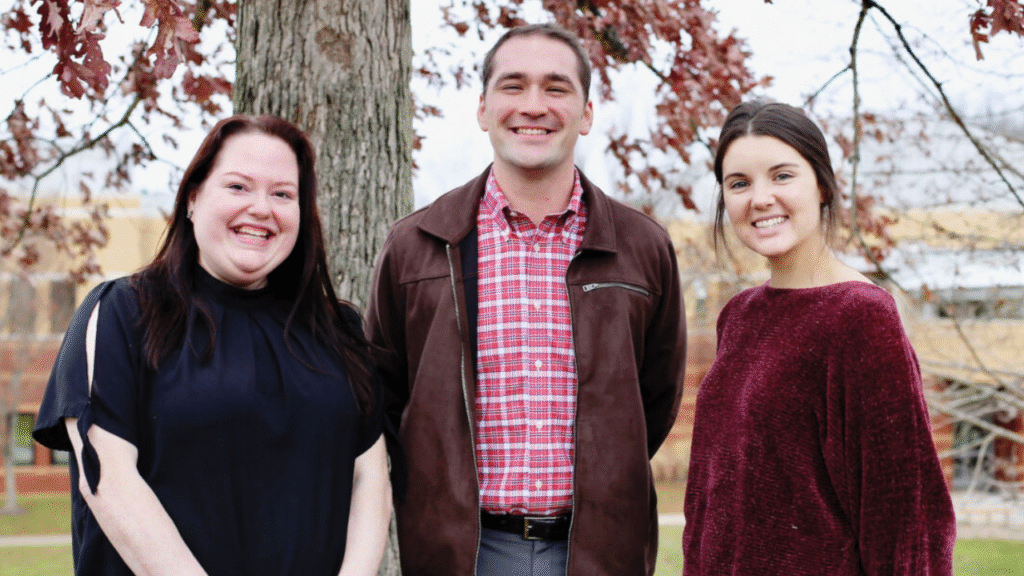
WSCO Financial Aid team on campus: Madison Galloway (L), Edmund Lynch (Middle), and Hanna Richard (R) (Photo source: WSCO)
Dual credit as a cost-saving strategy
Financial Aid Awareness Month also coincides with enrollment for College Credit Plus, Ohio’s dual-enrollment initiative running from February through April. The program enables students in grades 7–12 to earn up to 30 college credits per academic year at no direct cost. More than half of participating students statewide take courses through community colleges.
WSCO partners with 29 high schools to deliver college-level coursework. “College Credit Plus has been a game-changer for students and families,” said Dr. Jona Rinard, vice president of academic affairs at WSCO. Over the past two years, 81 associate degrees were awarded to high school students through the program, enabling graduates to enter the workforce earlier or transfer to four-year institutions with significant tuition savings.
Broader workforce and equity support
Beyond FAFSA guidance, WSCO supports students through federal TRIO initiatives, offering coaching, financial literacy tools and targeted assistance for first-generation and low-income learners.
Avi Zaffini, president and CEO of the Ohio Association of Community Colleges, emphasized the broader economic impact. “Ohio’s community colleges deliver the greatest value in higher education, combining affordability with strong workforce outcomes,” he said, noting that scholarships and forthcoming Workforce Pell funding will expand short-term credential access.
On Feb. 25, WSCO will host a public FAFSA workshop from 4–7 p.m., providing one-on-one counseling at no cost. “Financial aid is not only for recent high school graduates,” Galloway said. “Adults returning to school, career changers, and working parents can all qualify for support.”
For policymakers and international observers alike, WSCO’s model illustrates how targeted outreach and streamlined aid processes can strengthen workforce readiness while safeguarding educational access.