
California-based electric mobility startup Bingo has entered the Kenyan market with the launch of its flagship E2 electric vehicle, introducing a battery-swapping ecosystem designed to lower operating costs for commercial drivers and accelerate electric vehicle adoption across East Africa. The company is targeting Nairobi’s growing ride-hailing and last-mile delivery sectors, where rising fuel prices and thin operating margins have increased demand for lower-cost transport solutions. Unlike conventional electric vehicles that rely on plug-in charging, Bingo’s E2 has been purpose-built for commercial fleets. The vehicle features a dual-battery architecture consisting of one fixed battery and four swappable battery packs, delivering a driving range of up to 440 kilometres. Drivers can exchange depleted batteries for fully charged units within minutes at dedicated swap stations, reducing downtime and keeping vehicles on the road. To support the rollout, Bingo is developing a network of battery-swapping stations, DC fast chargers, and mobile roadside battery services throughout Nairobi. The company believes its integrated platform can significantly improve driver earnings by reducing fuel and maintenance costs. According to Bingo, ride-hailing drivers using the E2 could potentially double their take-home profits, with projected annual savings of around US$3,300 compared with equivalent petrol-powered vehicles. “We’re launching a new EV, but what we’re really launching is a whole ecosystem for ride-hailing and last-mile delivery drivers to succeed,” said Bingo co-founder Christian Scheder. Beyond vehicle sales, Bingo plans to establish local manufacturing capacity in Kenya. An initial fleet of 10 to 20 imported vehicles is expected to begin operating later this …
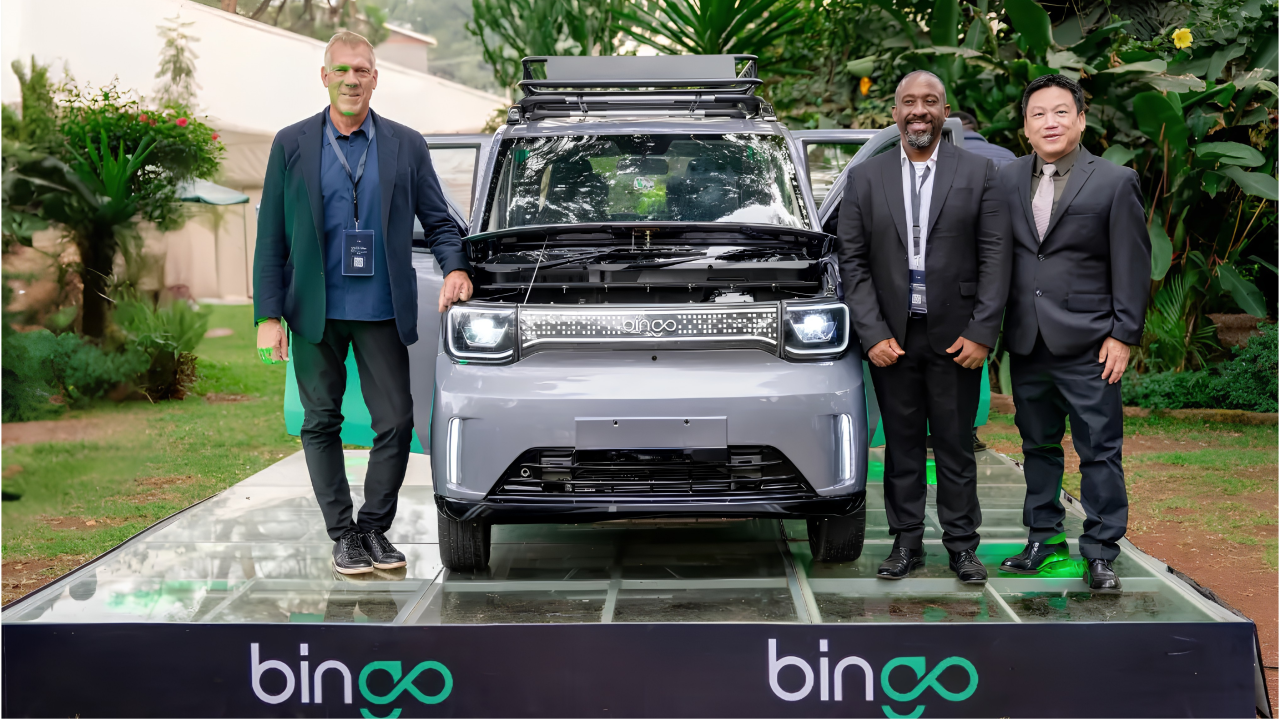
California-based electric mobility startup Bingo has entered the Kenyan market with the launch of its flagship E2 electric vehicle, introducing a battery-swapping ecosystem designed to lower operating costs for commercial drivers and accelerate electric vehicle adoption across East Africa.
The company is targeting Nairobi’s growing ride-hailing and last-mile delivery sectors, where rising fuel prices and thin operating margins have increased demand for lower-cost transport solutions.
Unlike conventional electric vehicles that rely on plug-in charging, Bingo’s E2 has been purpose-built for commercial fleets. The vehicle features a dual-battery architecture consisting of one fixed battery and four swappable battery packs, delivering a driving range of up to 440 kilometres. Drivers can exchange depleted batteries for fully charged units within minutes at dedicated swap stations, reducing downtime and keeping vehicles on the road.
To support the rollout, Bingo is developing a network of battery-swapping stations, DC fast chargers, and mobile roadside battery services throughout Nairobi.
The company believes its integrated platform can significantly improve driver earnings by reducing fuel and maintenance costs. According to Bingo, ride-hailing drivers using the E2 could potentially double their take-home profits, with projected annual savings of around US$3,300 compared with equivalent petrol-powered vehicles.
“We’re launching a new EV, but what we’re really launching is a whole ecosystem for ride-hailing and last-mile delivery drivers to succeed,” said Bingo co-founder Christian Scheder.
Beyond vehicle sales, Bingo plans to establish local manufacturing capacity in Kenya. An initial fleet of 10 to 20 imported vehicles is expected to begin operating later this year, with local assembly scheduled to commence in Nairobi by December 2026. The company plans to assemble its first 100 locally produced vehicles before scaling production to 1,500 units in 2027 and 10,000 electric vehicles by the end of 2028.
Bingo’s expansion is led by founders with experience in battery technology and commercial mobility. Co-founder Daniel Huang previously built the portable battery brand mophie and helped develop battery-swapping networks operating across 50 cities in Asia, managing more than 500,000 battery swaps each day.
The launch reflects growing international investment in Africa’s clean mobility sector, where expanding urban populations, rising fuel costs, and increasing environmental concerns are driving demand for electric transport solutions.
For Kenya, the investment supports broader efforts to modernise urban transport while reducing emissions from imported used vehicles that continue to dominate the country’s roads. By combining commercial EVs with battery-swapping infrastructure and local manufacturing, Bingo is positioning Kenya as a strategic hub for electric mobility innovation in Africa.