
Duquesne University has officially welcomed Dr. David Dausey as its 14th president, ushering in a new chapter for the Pittsburgh institution as it continues to expand its academic programs, research capabilities and campus infrastructure. Dausey, who previously served as provost and executive vice president, took office in July after a national search. A nationally recognised …
Duquesne University welcomes David Dausey as 14th president
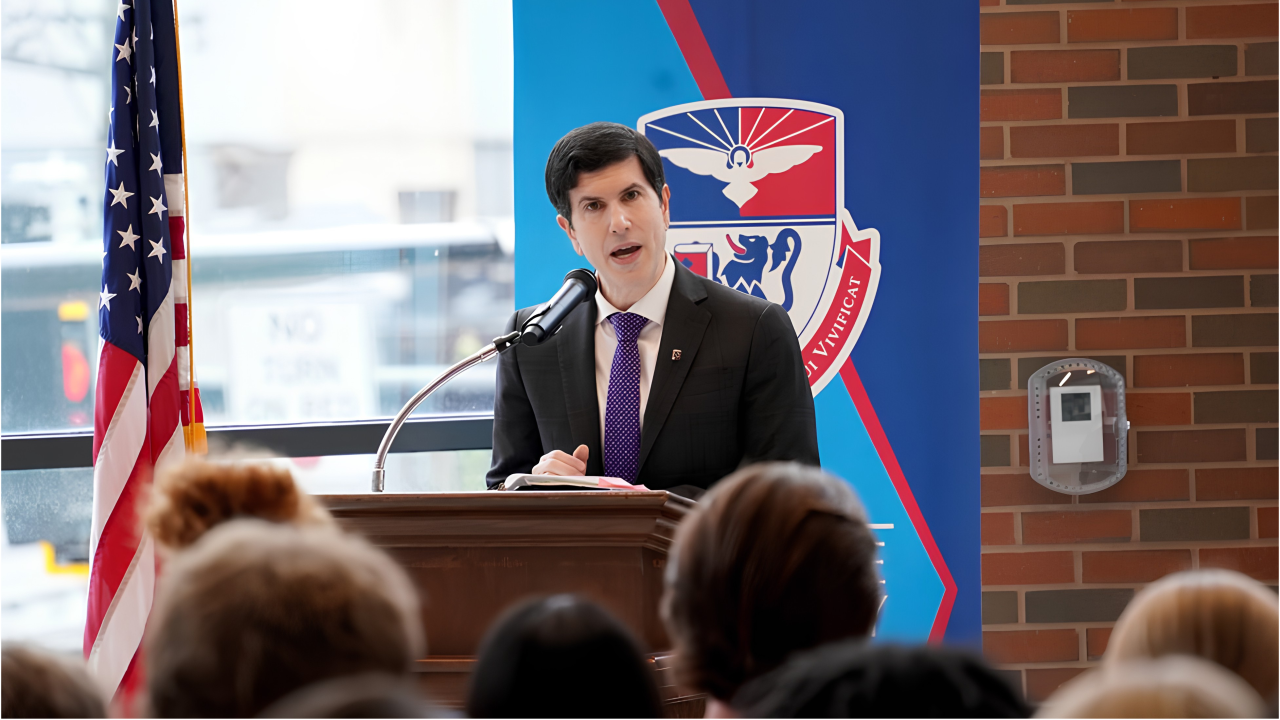
Duquesne University has officially welcomed Dr. David Dausey as its 14th president, ushering in a new chapter for the Pittsburgh institution as it continues to expand its academic programs, research capabilities and campus infrastructure.
Dausey, who previously served as provost and executive vice president, took office in July after a national search. A nationally recognised epidemiologist, he joined Duquesne in 2018 and has played a key role in several of the university’s recent growth initiatives.
Founded in 1878, Duquesne University is Pennsylvania’s largest Catholic university, enrolling more than 8,200 students, employing around 2,500 staff, and offering more than 200 undergraduate, graduate and professional programs.
Despite broader demographic challenges facing higher education across the Northeast, Duquesne continues to report strong demand. The university received a record 15,000 first-year applications for the 2026 academic year and expects to welcome around 1,500 new freshmen this fall.
“We are in a position of strength right now compared to many others,” Dausey said. “In a period of time when it’s been very difficult for higher education, we have outperformed, and we’ve done that by being very strategic and focused, but also true to our mission.”
The university is also investing heavily in campus expansion. Construction is underway on a new 80,000-square-foot Health Sciences Building, scheduled to open in 2028, which will support programs including physical therapy, occupational therapy and speech-language pathology through advanced simulation facilities and specialised laboratories.
Dausey said the project reinforces Duquesne’s role as a regional leader in healthcare education while strengthening Pittsburgh’s workforce pipeline.
Beyond infrastructure, the university is expanding academic offerings in high-demand fields such as engineering, health sciences, law and psychology, while integrating artificial intelligence into teaching and learning.
Looking ahead, Dausey is leading a campus-wide listening tour as Duquesne prepares a new strategic plan to coincide with its 150th anniversary in 2028, with ambitions to further strengthen the university’s national profile and expand its impact across higher education.