

From a family-run distillery on the outskirts of Reykjavík to a whisky brand sold in more than 20 countries, Eimverk Distillery has spent the past 16 years building a distinctly Icelandic product for global markets.
Many companies measure growth by how quickly they can expand. Iceland’s Eimverk Distillery has taken a different approach.
The family-owned company behind Flóki Whisky has spent more than 15 years building Iceland’s first whisky distillery, focusing on craftsmanship, local ingredients and long-term thinking rather than rapid scale.
“We decided that it’s okay that it takes a long time,” said Halli Þorkelsson, CEO and co-founder of Eimverk Distillery, during an interview with GMI POST. “Sometimes when you make choices for scale, you actually compromise authenticity, quality and your connection to the product.”
Founded in 2009 by Halli and his brother, Master Distiller Egill Þorkelsson, Eimverk was created with a simple but ambitious goal: produce a whisky that could only come from Iceland.
That proved easier said than done.
Unlike Scotland, Ireland or Japan, Iceland has little history of whisky production. For centuries, the country’s climate made barley cultivation difficult. According to Þorkelsson, Iceland experienced a cooling period during the Middle Ages that largely pushed the country out of the barley-growing zone. Only in recent decades has cultivating barley at commercial scale become practical again.
For Eimverk, that challenge became an opportunity.
Rather than importing ingredients and copying established whisky traditions, the company chose to build its products around Icelandic-grown barley and local production methods.
“We really wanted to figure out what Icelandic whisky is,” Þorkelsson said.
That commitment required patience. The company spent its first four years experimenting with recipes, conducting more than 165 trials to determine how Icelandic barley could be transformed into a distinctive whisky.
The result became Flóki Whisky, named after Hrafna-Flóki, the Norse explorer credited with giving Iceland its name.
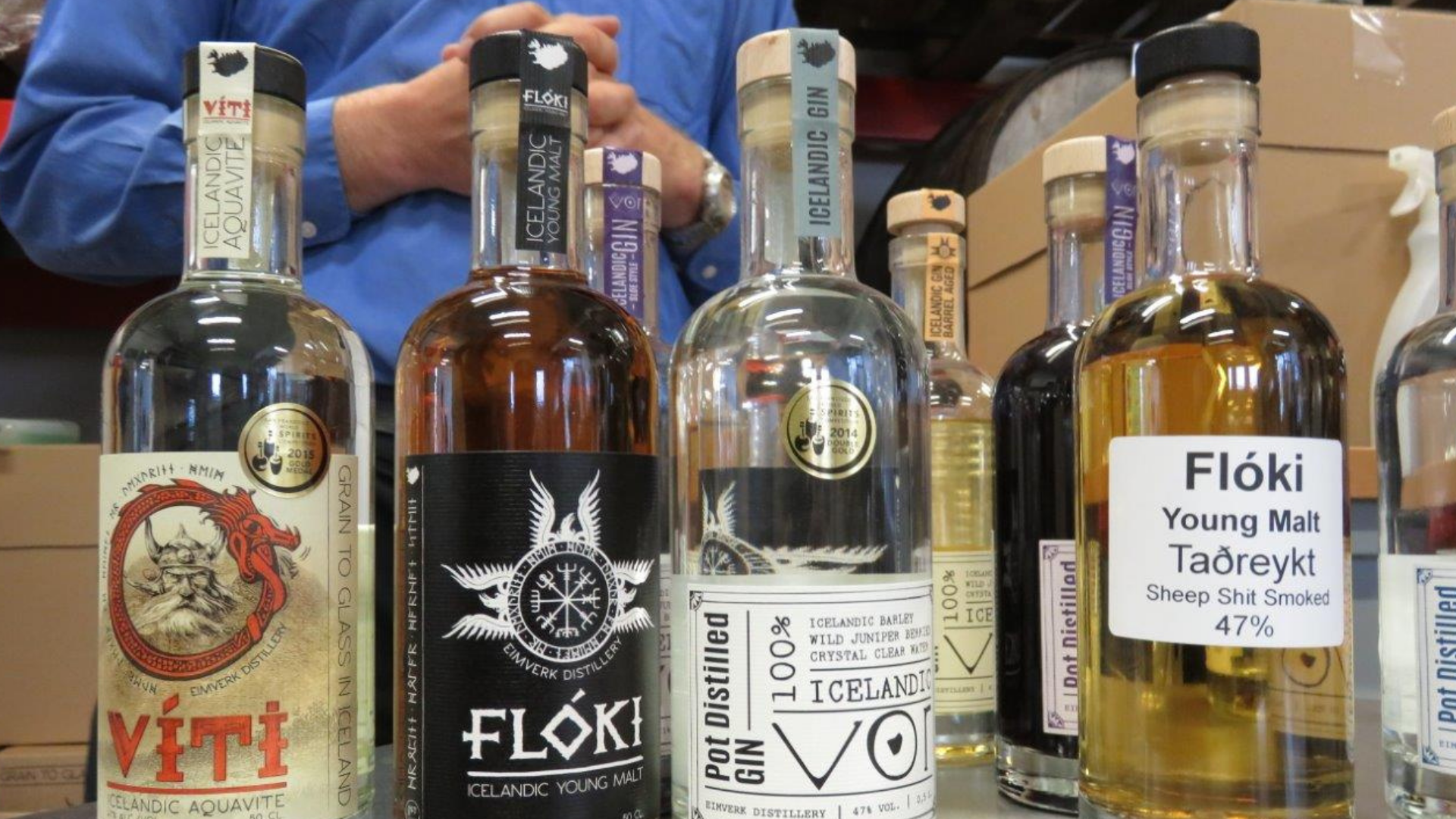
Today, Flóki has gained international recognition not only for being Iceland’s first single malt whisky but also for embracing distinctly Icelandic production methods. One of its best-known expressions is smoked using dried sheep dung, a traditional Icelandic method historically used to preserve food during long winters.
For Þorkelsson, however, the product itself is only part of the story.
“When someone buys a bottle of Flóki whisky in Japan, we don’t really think of it as selling alcohol,” he said. “What you’re buying is a little trip to a farm in Iceland and a little bit of Icelandic history.”
That philosophy has helped Eimverk expand into more than 20 countries while remaining a family-operated business. The company currently produces approximately 100,000 bottles annually and distributes through a combination of international partners, online retail channels and tourism-driven sales.
Rather than pursuing mass-market growth, Eimverk has focused on what Þorkelsson calls “staying small but being global.”
The approach reflects a broader lesson for businesses navigating growth in niche markets. Advances in e-commerce, tourism and global distribution networks have created opportunities for small producers to reach international customers without sacrificing their identity.
“You can scale without necessarily going into millions of bottles right away,” Þorkelsson said. “The world today gives us the opportunity to be a small distillery with international reach.”
That does not mean growth has stopped.
Eimverk is currently building a new distillery at its farm that is expected to open in 2027. The facility will increase production capacity by four to five times, allowing the company to meet growing international demand while maintaining its production philosophy.
Even then, the company’s planning horizon remains unusually long.
Because Iceland lacks native oak forests, Eimverk imports barrels from overseas. To address that challenge, the company has planted hundreds of oak trees on its property.
The trees are expected to mature in approximately 100 to 150 years.
“We have to think in decades,” Þorkelsson said. “We have to think family and we have to think generations.”
That long-term perspective may be Eimverk’s most valuable lesson.
At a time when many businesses are focused on quarterly results and rapid expansion, Eimverk has built its strategy around patience, craftsmanship and authenticity. For the company, growth is not about becoming the largest whisky producer in the world. It is about creating a product that reflects Iceland’s history, agriculture and culture while remaining true to its origins.
For Iceland, Eimverk demonstrates how small producers can compete globally by embracing what makes them different. Rather than replicating established industries elsewhere, the company has built a distinctive brand around local ingredients, family ownership and a uniquely Icelandic story.
As Flóki Whisky continues to expand internationally, Eimverk is proving that sometimes the most sustainable growth comes from taking the long view.