

Marking 160 years of diplomatic relations this year, Italy and Japan reaffirmed their commitment to closer cooperation when Italian Prime Minister Giorgia Meloni met with her counterpart Sanae Takaichi in Tokyo last month, with the signing of various agreements, including those covering defense and aerospace.
In economic development, Italy moved beyond the renowned 3Fs — fashion, food and Ferrari — and has begun promoting its leadership in life sciences and its edge in innovation. Tapping Japan’s extensive capital resources, the bilateral partnership has become highly successful and profitable.
Italy’s active pharmaceutical ingredient ecosystem has established deep roots, with executives pointing out that staying competitive today relies on disciplined reinvestment and stable ownership.
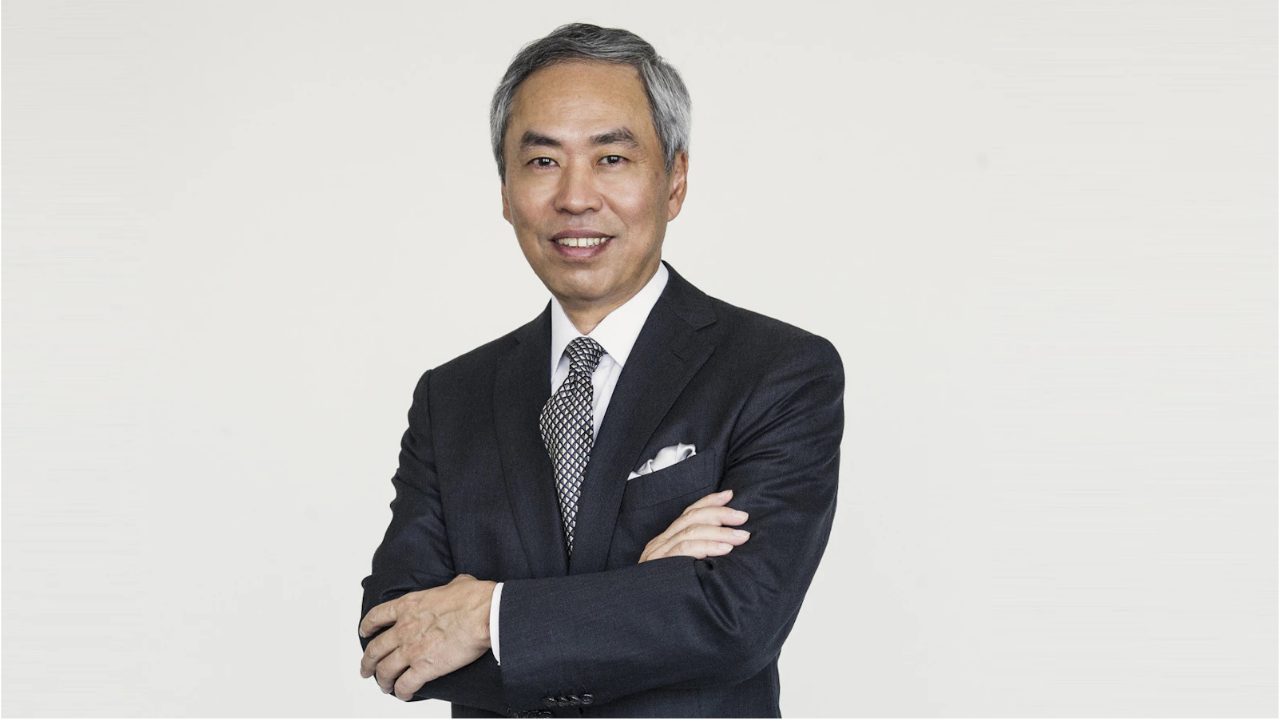
“To stay ahead of the competition, you must invest a lot financially. Scale and modernization are prerequisites to becoming top innovators,” said Procos CEO Enrico Zodio, who has led the Japanese-owned company for more than 15 years.
In line with those objectives, Procos has announced a multi-phased construction of a new production unit, dubbed R11, which will be rolled out “harmonically, organically and sustainably.”
The first phase, according to Zodio, represents more than $70 million in fresh investment and will raise production capacity by 15%, while increasing services for innovators. It also plans to establish a new research and development center to expand its research activities and attract more talent.
However, capital expenditure is only half the story. For Zodio, the other half is nurturing workers and attracting young talent.
“Everything has been possible thanks to people, finding the right people at the right moment,” said Zodio, who shared that the company is open to hire graduates who have no previous experience but are willing to learn.
He also pointed out that the average age of workers at the company is 38 and recognized that younger teams bring “a lot of positive energy,” which can benefit any business committed to continuous innovation.
On the discovery side of pharmaceuticals, Milan-based Axxam is positioning itself as an ideal partner for Japan’s drug development ecosystem and a reliable bridge between European science and global commercialization.
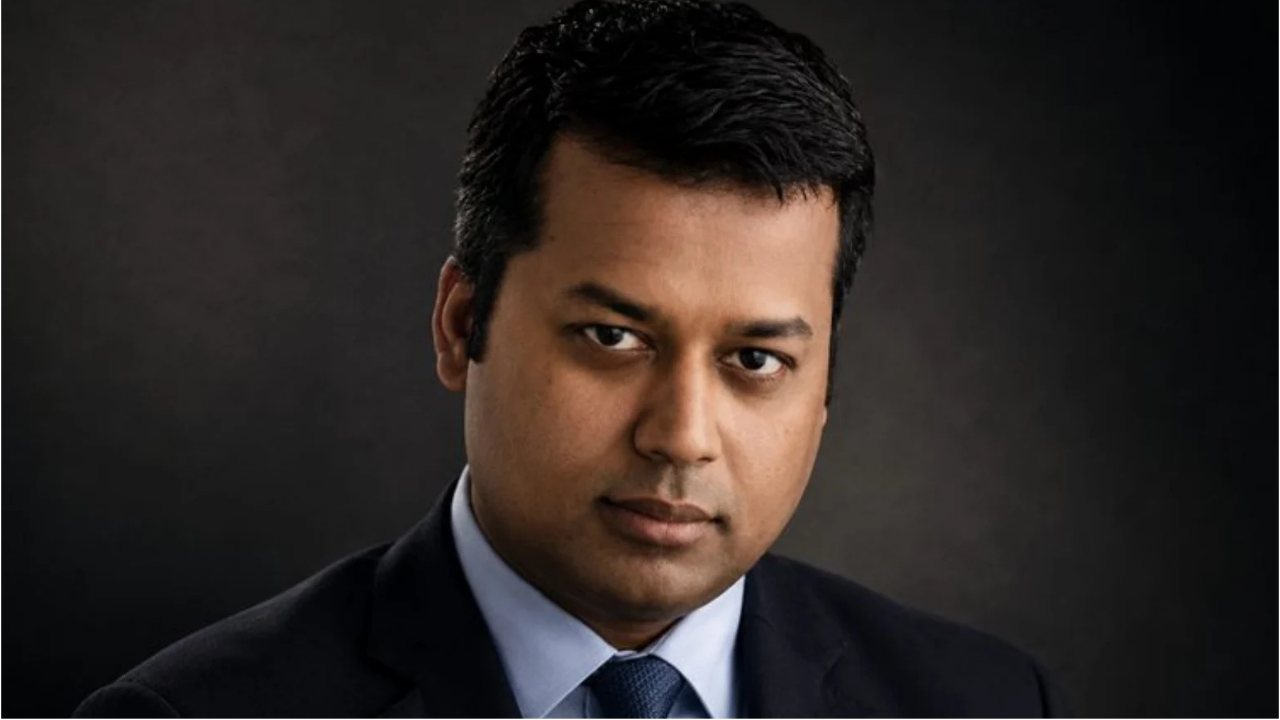
CEO Ciriaco Maraschiello said the company opened a subsidiary in Boston to strengthen commercial operations and create a foothold for future acquisitions in line with its goal to become a global leader in drug discovery.
Committed to formalizing quality systems, Axxam secured its ISO (International Organization for Standardization) 9001, ISO 27001 and ISO 45001 certifications in less than three years, according to Maraschiello.
Axxam has also integrated generative artificial intelligence into research workflows to identify new therapeutic targets, which addresses an industry-wide shortage of novelty in early-stage pipelines, according to Maraschiello.
To further consolidate its global growth, Maraschiello has signified plans to expand to Japan, increase its visibility in the country and collaborate with its industry counterparts.
Across Italy, business groups foresee the relationship with Japan broadening further as long as supply chains become more regional and adjust for unexpected disruptions.
Davide Fantoni, general manager of the Italian Chamber of Commerce in Japan, hopes to see collaboration spread outside consumer goods and extend into the industrial sector.